News
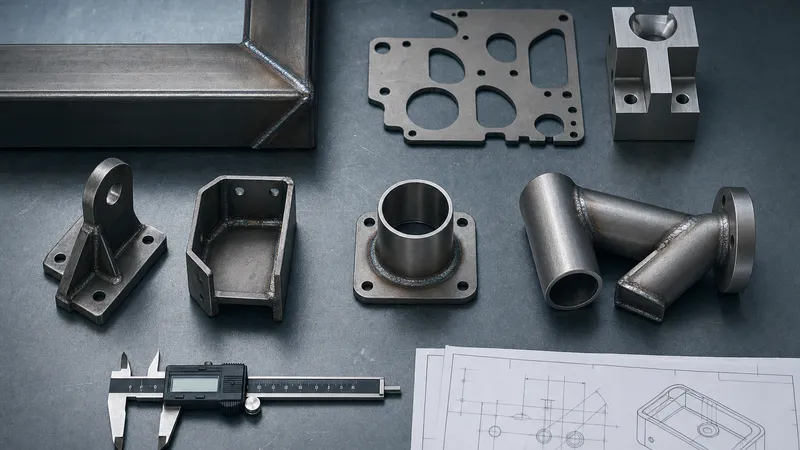
A cheap part does not mean a cheap supplier. Suppliers price baskets, and inside a basket some positions are sharpened while others carry the recovered margin. Our new insight is about why a single-part benchmark tells you almost nothing, and what a supplier test needs instead.

DARIN is the methodology behind our cost-optimization work: a should-cost calculation per part, plus five levers (Design, Automate, Re-locate, Identify, Negotiate) that each carry their own number. It now has a landing page and four subpages covering how the calculation is built and what it is used for.

257 automotive supplier insolvencies between 2020 and 2025, 59 of them in 2025 alone. Our new insight argues the risk sits in the missing recalculation rather than the original decision, and that qualifying an alternative supplier realistically takes months.

Data preparation, benchmarking and Excel analysis used to be the billable core of an industrial consulting project. They have become a setup step. Our longest insight so far looks at what clients pay for instead, and why an auditable cost model beats a black-box estimate.

A customer who expected almost no savings potential. 180 of 198 part numbers analyzed at part level, around 91% of spend, roughly 20% savings potential identified, plus a likely PLM weight-data issue with consequences well beyond procurement.

Standard parts and C-parts are widely assumed to be optimized because the ordering process runs smoothly. In one analysis, almost half of 1,800+ part numbers were catalog or standard parts, and the price logic underneath them had drifted out of shape.

SAP, SupplyOn, Jaggaer and Coupa answer what was ordered and what was paid. None of them answers what a technical part should cost, which at aerospace batch sizes of 1 to 10 is the question that decides whether a business case survives its first production run.

Statistical cost modelling across 75 complex welded assemblies reached a 92%+ model fit and isolated three cost drivers behind a €4.2M category. Work that took an internal value engineer about a week now runs in seconds with PartIQ.

A private equity investor brought 20 drawings to a meeting and a 44-component welded assembly to test live. COVALYZE returned a full structured cost breakdown during the session, and the conversation moved from a product test to a portfolio-wide question.

European component makers lost nearly 80,000 jobs in 18 months. Our new insight argues this is a structural shift in how cost gets negotiated rather than a cyclical dip, and that suppliers who cannot quantify their own costs at OEM level are accepting terms rather than negotiating them.

How COVALYZE helped a global mechanical engineering OEM expand microcontroller data from 5 to 200 parameters, build a 92%-quality pricing model, and identify 12%+ savings potential across EUR 7M+ in purchasing volume.

How COVALYZE helped a PE-backed energy equipment manufacturer quantify piece quantity as the #1 cost driver across 50 high-runner turned parts — turning procurement intuition into a negotiation-ready decision system.

How COVALYZE helped a global PCBA buyer harmonize 45 BOM tables across 3 suppliers, model component-level cost structures, and challenge supplier price increases across a EUR 50M+ procurement volume.

How COVALYZE helped a U.S. automotive supplier turn 45 complex CAD files into a data-driven procurement strategy — covering 132 validated contact variants and USD 12M+ in procurement volume.

How combining PartIQ and Covalyze Analytics helps identify outliers, find similar parts, and consolidate complexity across entire commodities.

Turn engineering drawings into machine ready attributes so procurement and analytics can move fast with confidence.

Unify technical and commercial views so your teams can compare parts, forecast costs, and act on reliable insights.

How to reveal savings potential across BOMs and suppliers with normalized data and proven benchmarks.