A private equity investor who had already seen results from one portfolio company arrived with 20 drawings and asked to test them live. PartIQ costed them retrospectively during the session. The reaction was quick enough that a second portfolio company entered the discussion before the meeting was over: a plant engineering business building highly customized welded assemblies, with strong engineering know-how and a quoting process that could not keep up with it.
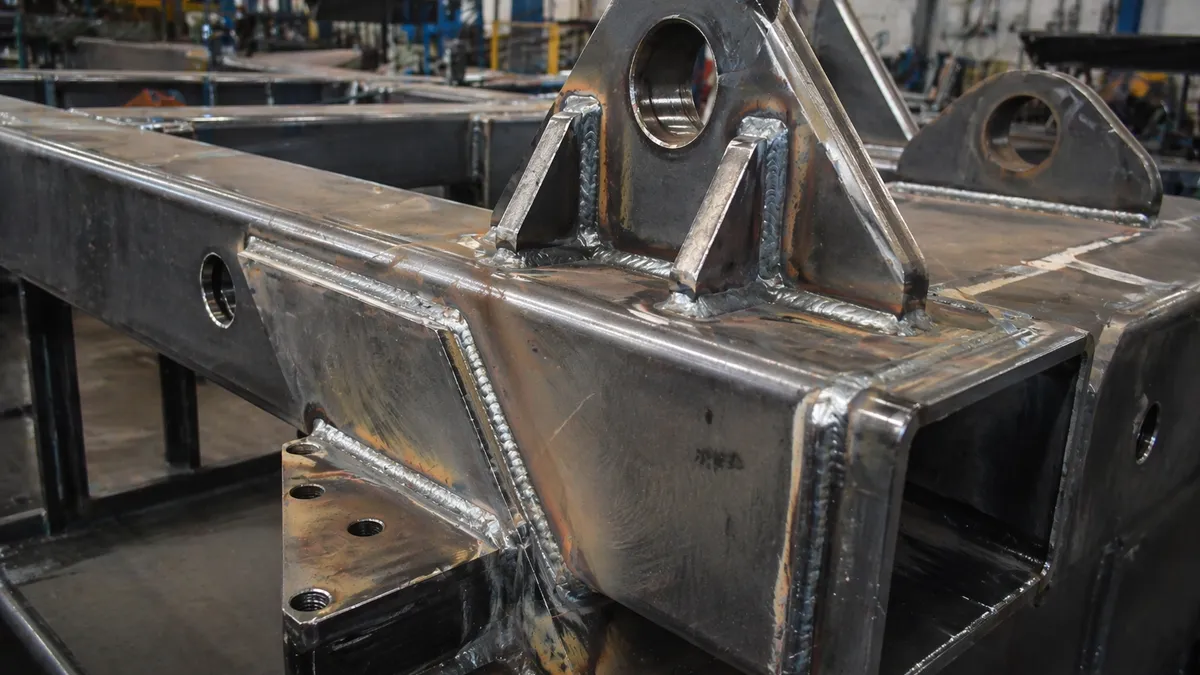
The live test used a welded structure with 44 individual components, 40 kilograms of assembly weight, and an expected production cost above EUR 1,600. The assembly went in as it was, without pre-processing, and COVALYZE produced a complete structured should-cost breakdown during the meeting.
The more useful part was the comparison that followed. In the earlier 2D drawing project, even a strong workflow yielded only 25 to 30 structured parameters per part, and for welded assemblies each component on the drawing had to be identified separately before material and total weight could be derived. A 3D model yields 200 to 250 and more: holes, threads, weld seams, explicit manufacturing features, and cleaner geometry throughout. The calculation then reflects the actual structure of the assembly rather than an approximation of it.
For the portfolio company, that changes the day-to-day work. Engineering and sales can price a new assembly in seconds, adjust process steps directly when a part will stay uncoated, replace rule-of-thumb weld surcharges with explicit factors, and scale known fabrication costs to new quantities or configurations. Relocation scenarios across Germany, Romania, Poland, China and the United States sit on the same calculation.