FAST TRACK FOR COST ENGINEERING, VALUE ENGINEERING & TECHNICAL PROCUREMENT
Turn technical drawings into
auditable cost drivers and target prices.
One commodity group. Up to 200 parts. Cost-relevant features extracted from PDF drawings and linked to spend data — for explainable, part-level target prices in two weeks.
One commodity group. Two weeks. Explainable target prices.
2 Weeks Typical delivery time
Up to 200 Technical parts per scope
PDF + Spend Drawings & data as input
Target Prices Built from part characteristics
Part of the DARIN methodology
The Engineering Fast Track is the fixed-scope way to buy the DARIN methodology for one commodity group — the same five-lever cost logic (Design, Automate, Re-locate, Identify, Negotiate) applied to your drawings and spend data.
Trusted by Industry Leaders Engineering and procurement teams at leading manufacturers rely on COVALYZE
Why this matters for engineering
Target prices are only useful if the technical logic is explainable.
Generic benchmarks fall apart the moment a supplier or an engineer challenges the assumptions. Fast Track ties every target price back to the actual part — so the number holds up in a technical review.
2 weeks
Fixed turnaround
1 group
Fixed scope
01
Explain why one part costs more than another
Trace each price difference back to the feature that drives it — geometry, material, tolerance or process.
02
Compare only technically similar parts
Similar-part clustering keeps benchmarks honest, so you compare like with like — not apples with castings.
03
See which cost drivers actually matter
A ranked view of the technical features that move price across the whole commodity group.
04
Flag supplier prices that need validation
Spot parts priced above their expected technical cost level and focus technical review where it pays.
05
Give engineering and procurement one fact base
A shared, auditable model for design-to-cost, value engineering and negotiation alike.
SOUND FAMILIAR?
Technical cost transparency is hard when the data is trapped in drawings.
Cost Logic Locked in PDFs
Dimensions, materials, tolerances and processes drive cost — but stuck in PDF drawings they're not structured, comparable, or usable for analysis. So teams fall back on manual reviews and Excel workarounds.
Target Prices You Can't Defend
Without a technical basis, target prices don't survive supplier pushback — and supplier-price outliers are impossible to identify systematically across parts and variants.
No Shared Fact Base
Engineering and procurement work from different data, so cost drivers stay hidden across drawings, variants and suppliers — and there's no common ground for negotiations.
What COVALYZE extracts
From PDF drawings to structured cost drivers.
One fixed-scope pipeline — from raw drawings to an explainable, part-level cost model.
01Extraction
02Structuring
03Cost drivers
04Target pricing
05Outliers
01Extraction
Cost-Relevant Feature Extraction
PartIQ's multi-AI system extracts material, dimensions, tolerances, surface treatment, machining features and complexity indicators from your 2D PDF drawings.
Extraction accuracy above 95%, so the cost model starts from clean data — not manual transcription.
Technical drawing parameters extracted into structured data
02Structuring
Normalized Part-Level Feature Data
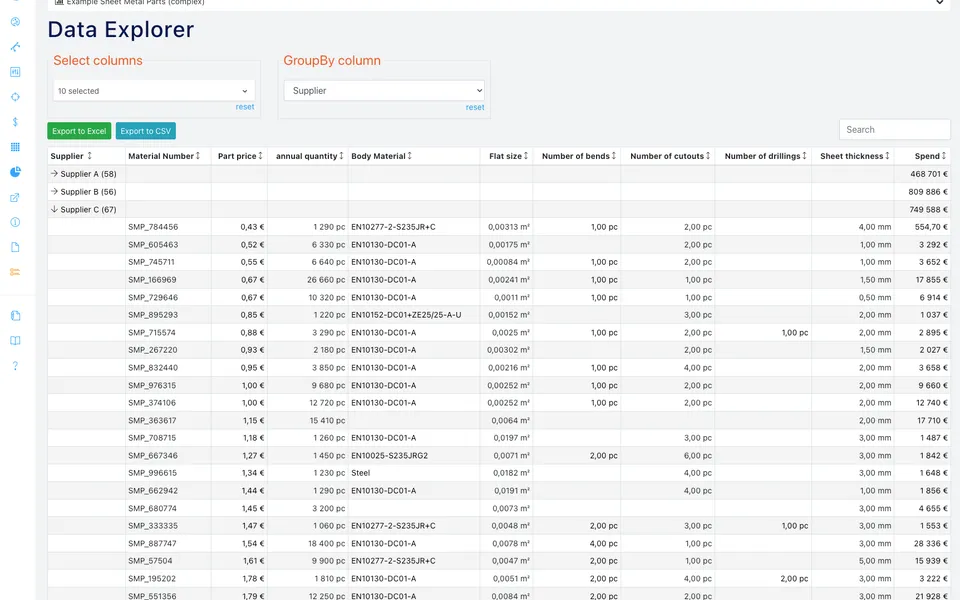
Extracted features are normalized and linked to your spend data — part number, supplier, price, quantity, material group.
The result is a consistent, comparable technical feature base for the whole commodity group.
Normalized technical feature base linked to spend
03Cost drivers
Cost-Driver Analysis
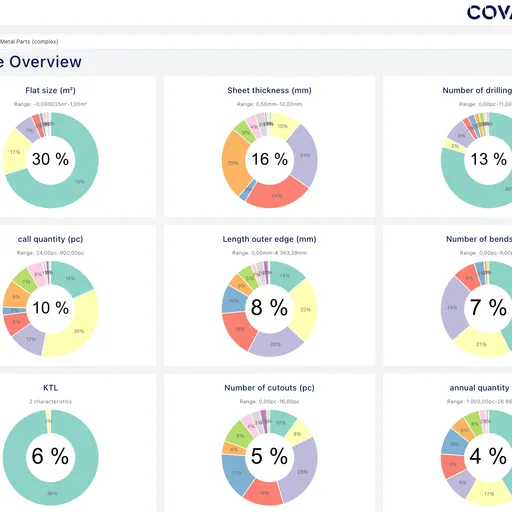
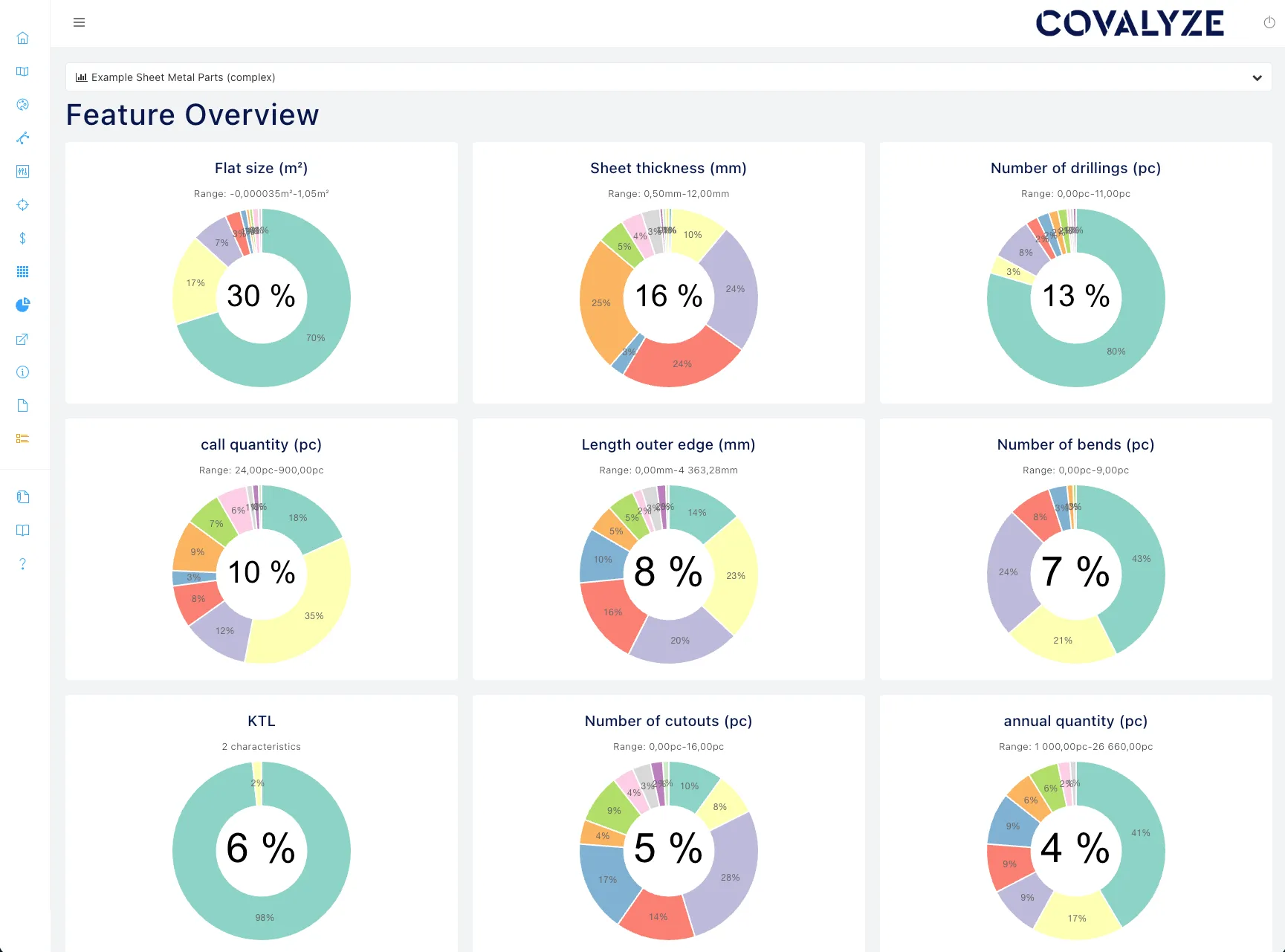
A ranked view of which technical characteristics explain price differences across parts and suppliers.
The cost logic becomes visible, reviewable and defensible — line by line.
Which technical features drive the price
04Target pricing
Explainable Target Prices
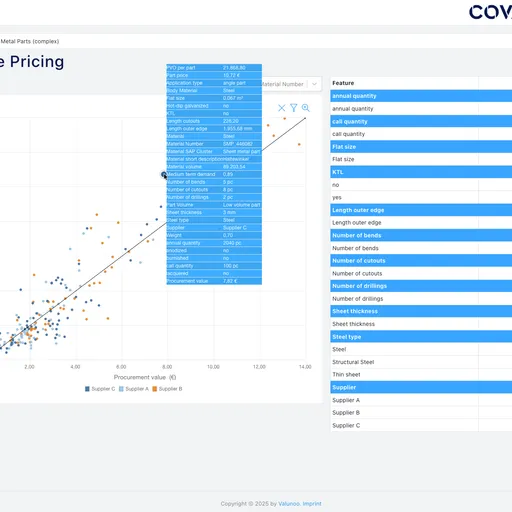
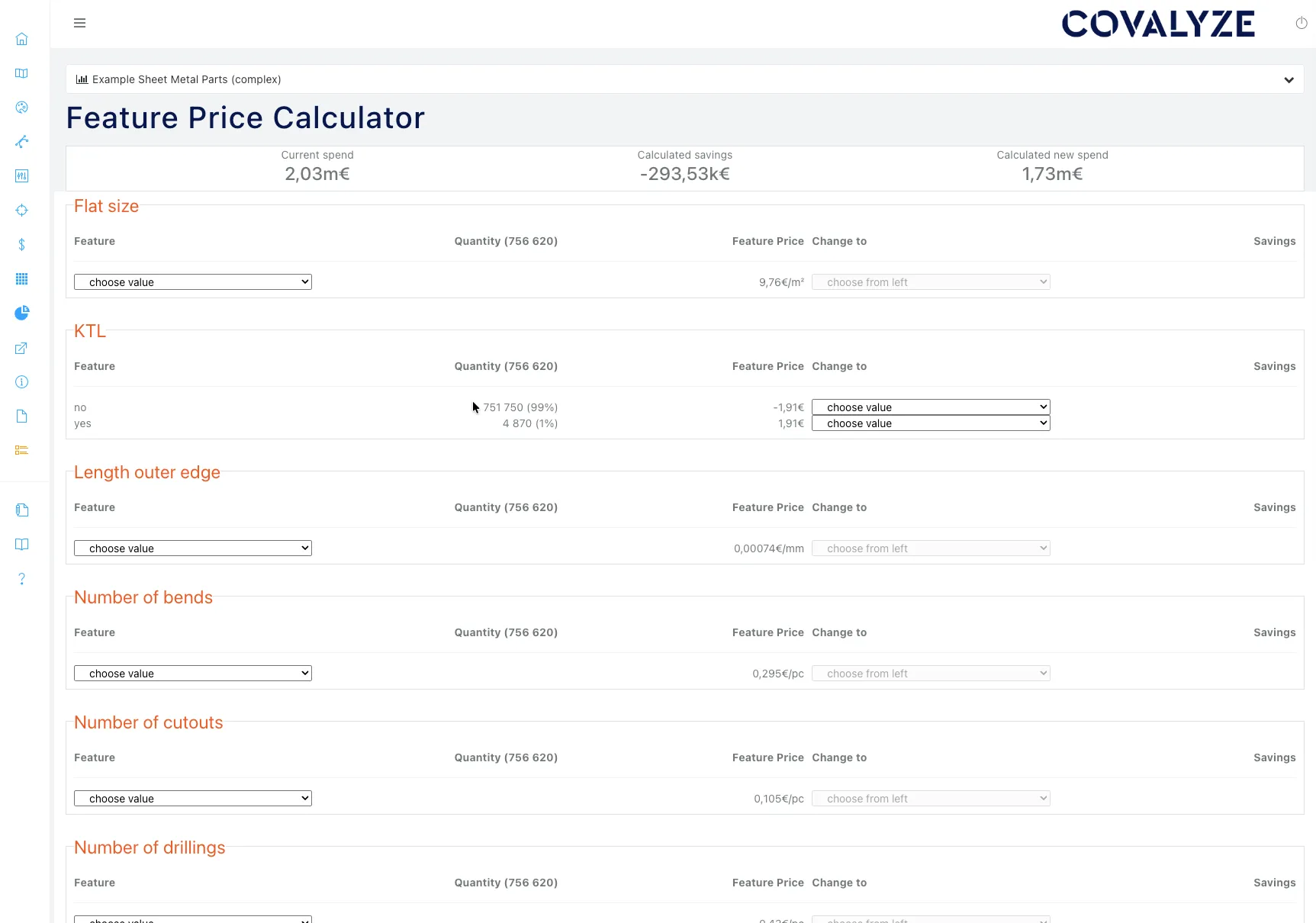
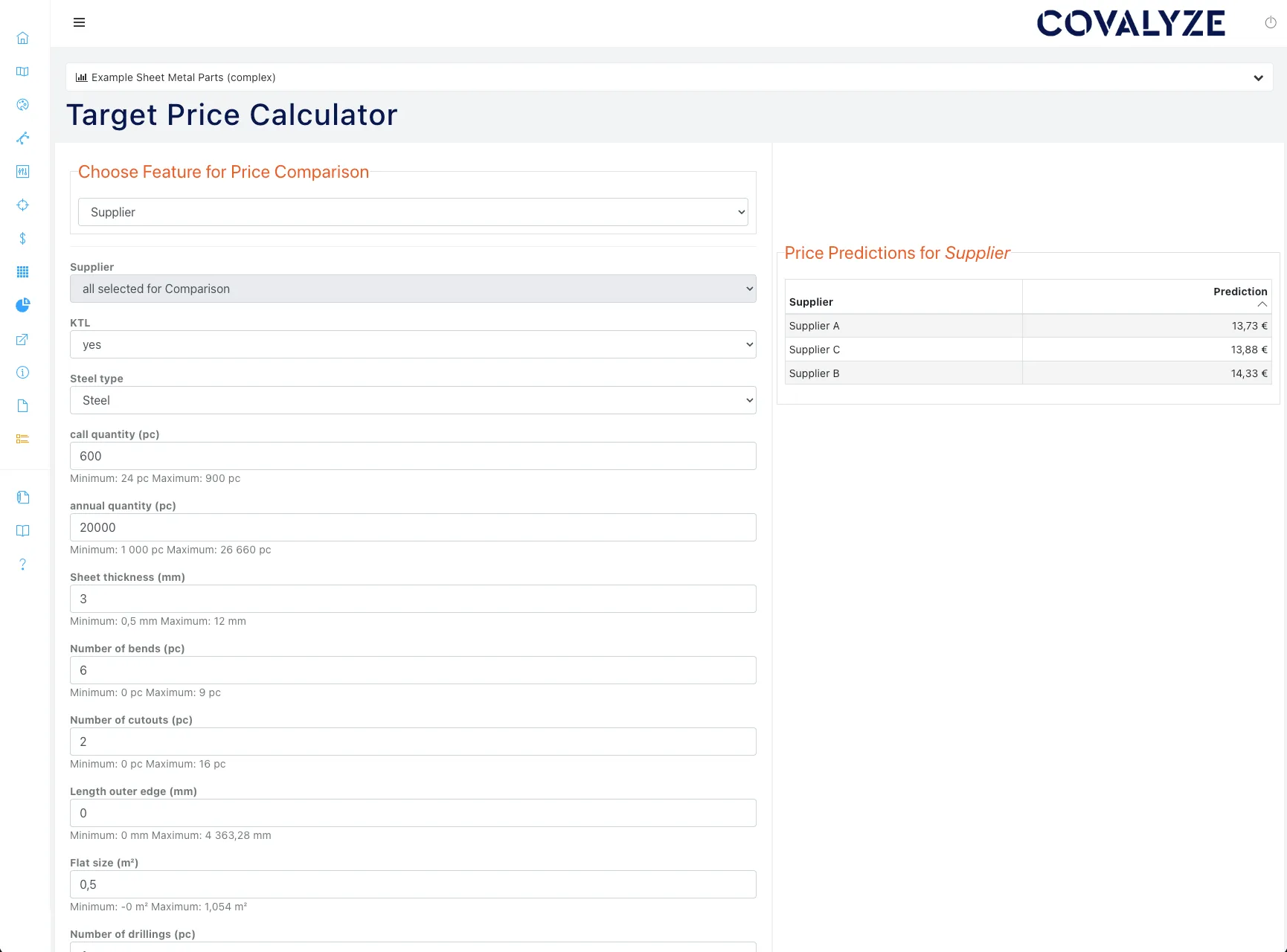
Part-level target prices built from technical characteristics, benchmark logic and comparable-part structures.
Grounded in over €2.1 billion of analyzed spend across 110+ categories.
Feature-based target price per part number
05Outliers
Similar Parts & Supplier-Price Outliers
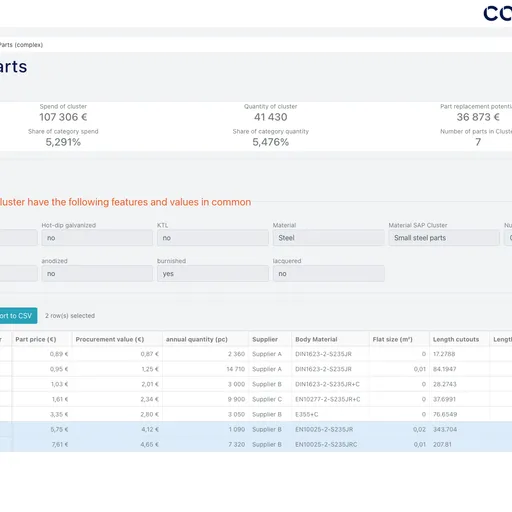
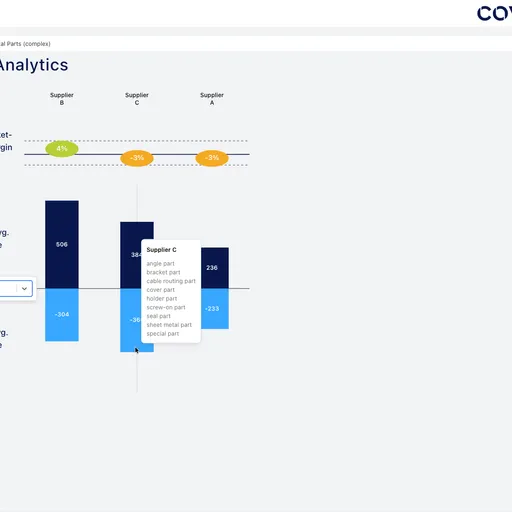
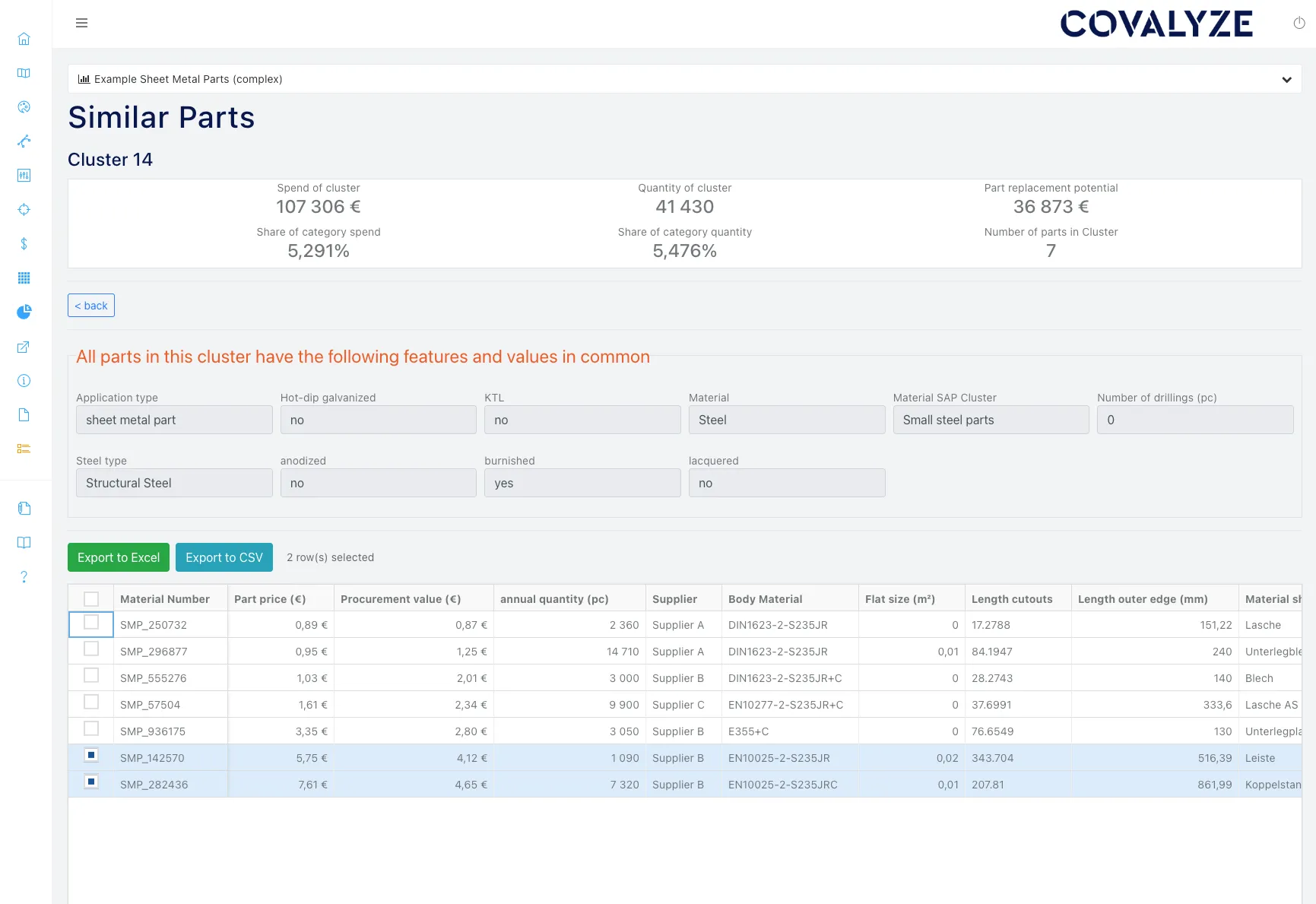
Technically comparable parts with inconsistent pricing, and supplier prices that deviate from expected cost levels — surfaced automatically.
The starting point for validation, consolidation and negotiation.
Similar-part clusters and price outliers
Technical output preview
What the engineering team can work with.
Actionable for engineering and procurement alike. The goal isn't another benchmark — it's making the technical cost logic visible, reviewable and usable.
Inside your report9 deliverables
01Part-level feature table
02Material, dimension, tolerance & process indicators
03Cost-driver ranking
04Supplier-price vs. target-price comparison
05Similar-part clusters
06Savings-potential overview
07Outlier list for technical review
08Recommended negotiation & validation priorities
09Results walkthrough with assumptions & limitations
Illustrative Fast Track technical output
Example use cases
Typical questions a Fast Track answers.
One technical fact base, used across engineering and procurement.
01+
Cost Engineering
Which technical features explain the current price differences across the commodity group?
02+
Value Engineering
Where do similar parts show inconsistent pricing or avoidable complexity?
03+
Technical Procurement
Which supplier prices should be challenged first — and what is a defensible target price?
04+
Supplier Development
Where do we need a deeper technical discussion with suppliers?
05+
Engineering Management
Where are the largest cost drivers, and which design or specification patterns should be reviewed?
Client Results
Real savings from technical cost analytics.
A few more client results from the case library, each driven by the same markdown-based format.
One defined commodity group: available PDF drawings plus basic spend data — part number, supplier, price, quantity, material group. A 30-minute kickoff aligns on scope.
20%
~2 days
02 We structure it
We extract, normalize, and model
We extract drawing features, normalize them, link them to spend data, and build a part-level cost-driver view and target-price model — no effort required from your team.
75%
~8–10 days
03 You receive it
You receive the cost-intelligence output
Target prices, supplier-price outliers, savings potential, similar-part opportunities, and a technical walkthrough of the assumptions and logic.
100%
Week 2
Commercial scope
Fixed-scope technical cost analysis.
Start with one commodity group and a defined deliverable — or talk to us about ongoing, multi-commodity coverage.
ENGINEERING FAST TRACK
Engineering Fast Track
A defined, fully managed engagement. You send drawings and spend data; we deliver structured cost drivers, explainable target prices, and an engineering-ready fact base.
Ongoing cost transparency across your entire technical spend portfolio. Full access to COVALYZE Analytics and PartIQ, with dedicated onboarding and support.
You have one technical commodity group with measurable spend
You have PDF drawings or technical documentation
You want to understand the technical cost drivers behind prices
You need target prices that are explainable, not just benchmarked
You want to compare similar parts, variants or supplier price levels
You need a focused analysis before a sourcing, design-to-cost or supplier review
Fast Track is not the right fit if
You only need indirect-spend benchmarking
You do not have technical part documentation
You need a fully integrated enterprise platform as the first step
You only want a generic market-price estimate
You are not ready to share part-level spend and technical data
Engineering Fast Track — frequently asked questions.
Scope & Method
No. The fit check is used to review your available drawings, spend data, and commodity scope. If the data is sufficient for a meaningful analysis, the Fast Track can proceed — it can start with imperfect data.
Data, Use & Next Steps
Minimum input, for one commodity group: PDF drawings or technical documentation, part numbers, supplier names, current prices, and annual quantities. Helpful extras — material group, manufacturing process, historical prices, supplier quotes, CAD or STEP files, engineering notes, or existing cost breakdowns — improve the analysis but aren't required to start.
Make technical cost drivers visible in two weeks.
Send us one commodity group, PDF drawings and spend data. We'll check whether it's suitable for a Fast Track and show how COVALYZE turns it into target prices, outlier detection and engineering-ready cost transparency.