Aerospace procurement is not just a sourcing challenge. It is a cost-transparency challenge.
In many large aerospace organizations, established procurement systems such as SAP, SupplyOn or similar platforms dominate the transactional side of purchasing. They help companies manage suppliers, create parts, process purchase orders, check invoices, run tenders and analyze spend volumes.
For many aerospace suppliers and mid-sized manufacturing companies, the situation looks different. They often use custom-built database solutions, ERP extensions, or more accessible procurement platforms such as Jaggaer or Coupa. These systems handle procurement transactions well, but they share one limitation: they analyze what was ordered, what was paid and how much volume moved through the system. None of them explains what a technical part should cost, which is the gap COVALYZE closes.
Procurement systems show what was paid. COVALYZE shows what a part should cost.
Traditional procurement platforms are built around transactions. They answer questions such as:
- Which supplier delivered the part?
- What was the purchase price?
- What was the order volume?
- Which invoice was received?
- Which spend category does the part belong to?
COVALYZE answers a different question:
What should this part cost, based on its material, geometry, manufacturing process, machine time, setup time, quantity and production region?
That is the difference between spend analysis and manufacturing cost intelligence. Other procurement solutions analyze prices and order volumes; COVALYZE analyzes manufacturing costs at process level.
Procurement, engineering and management teams can then judge whether a supplier price is technically plausible, whether a welded assembly should be produced internally or externally, and what the same part would cost in Germany, China, the USA, Turkey, Poland or Romania.
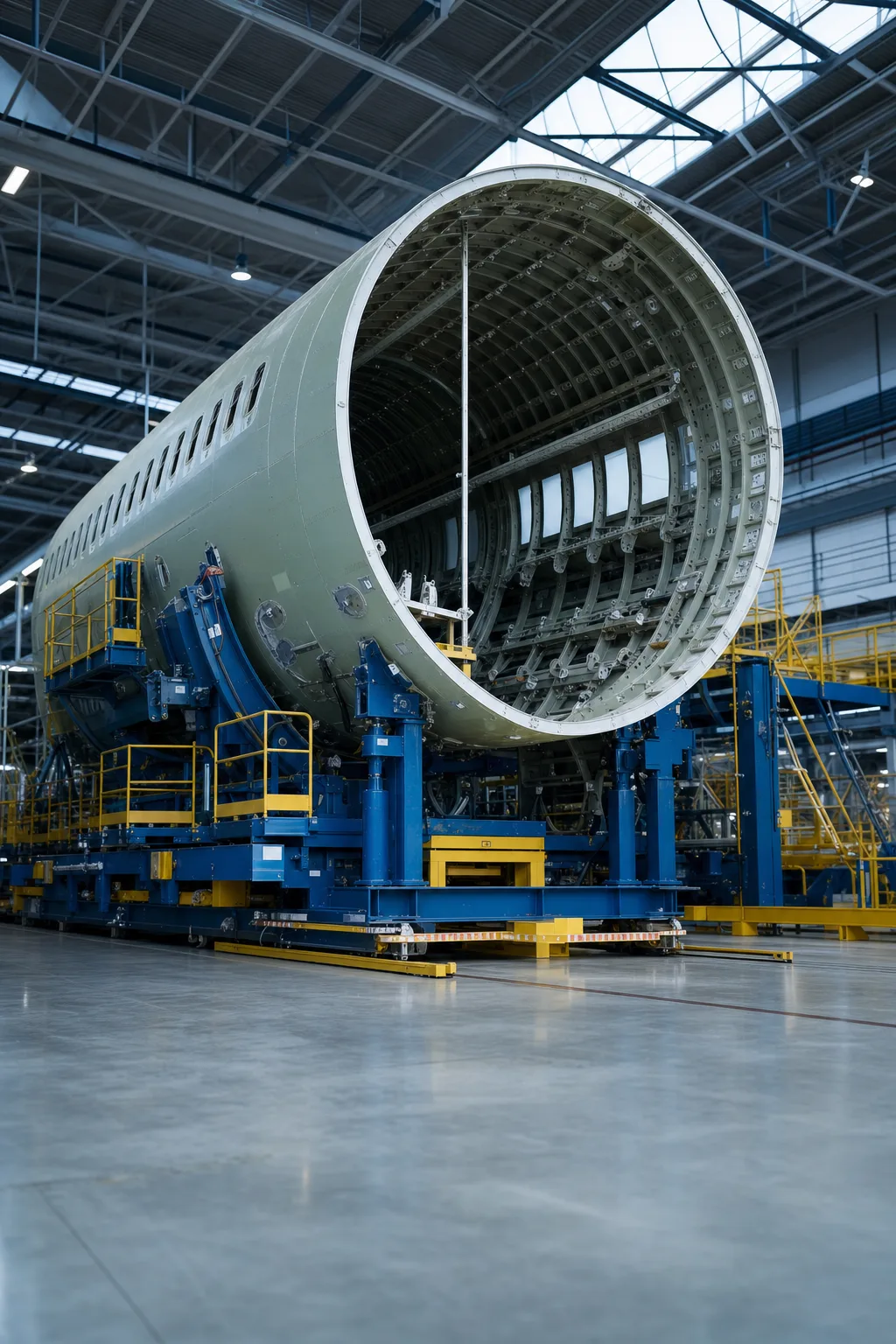
Why aerospace procurement is different
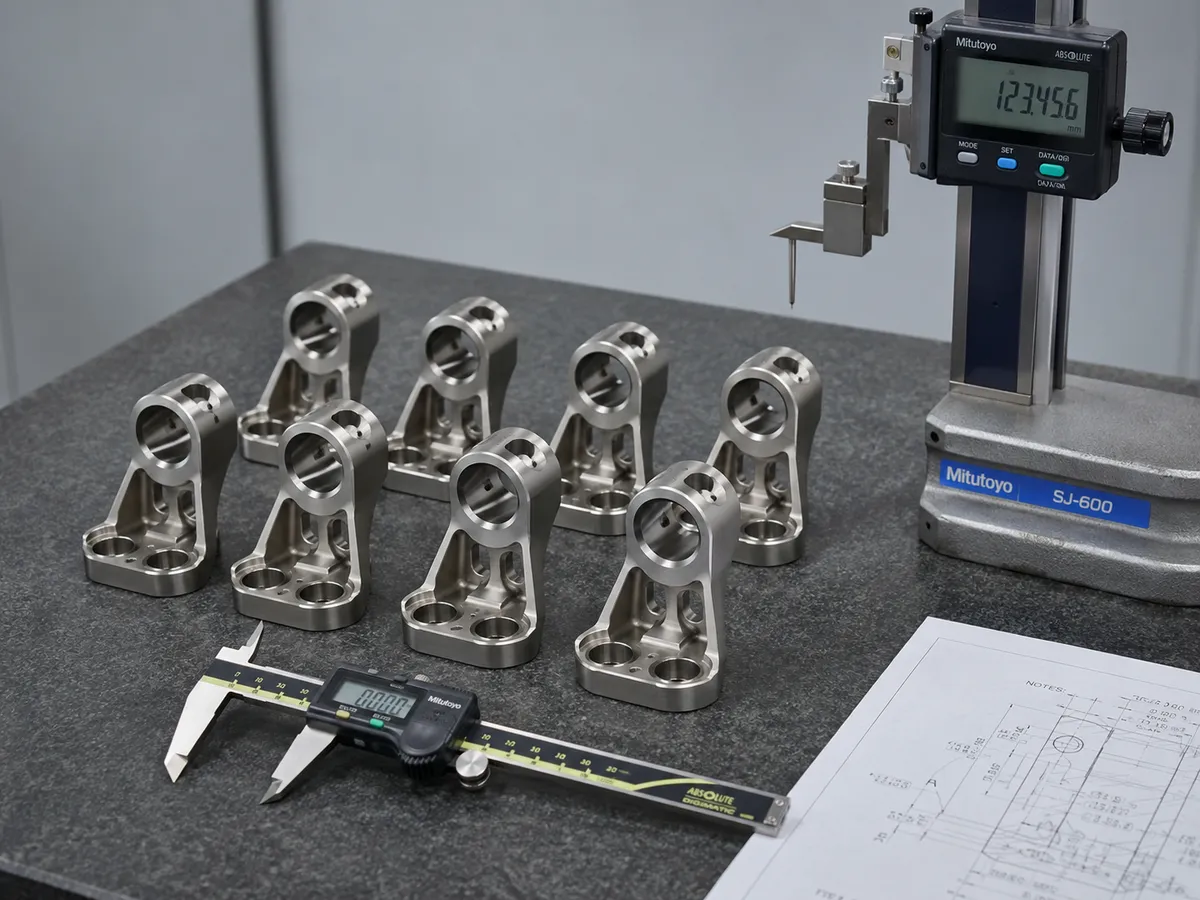
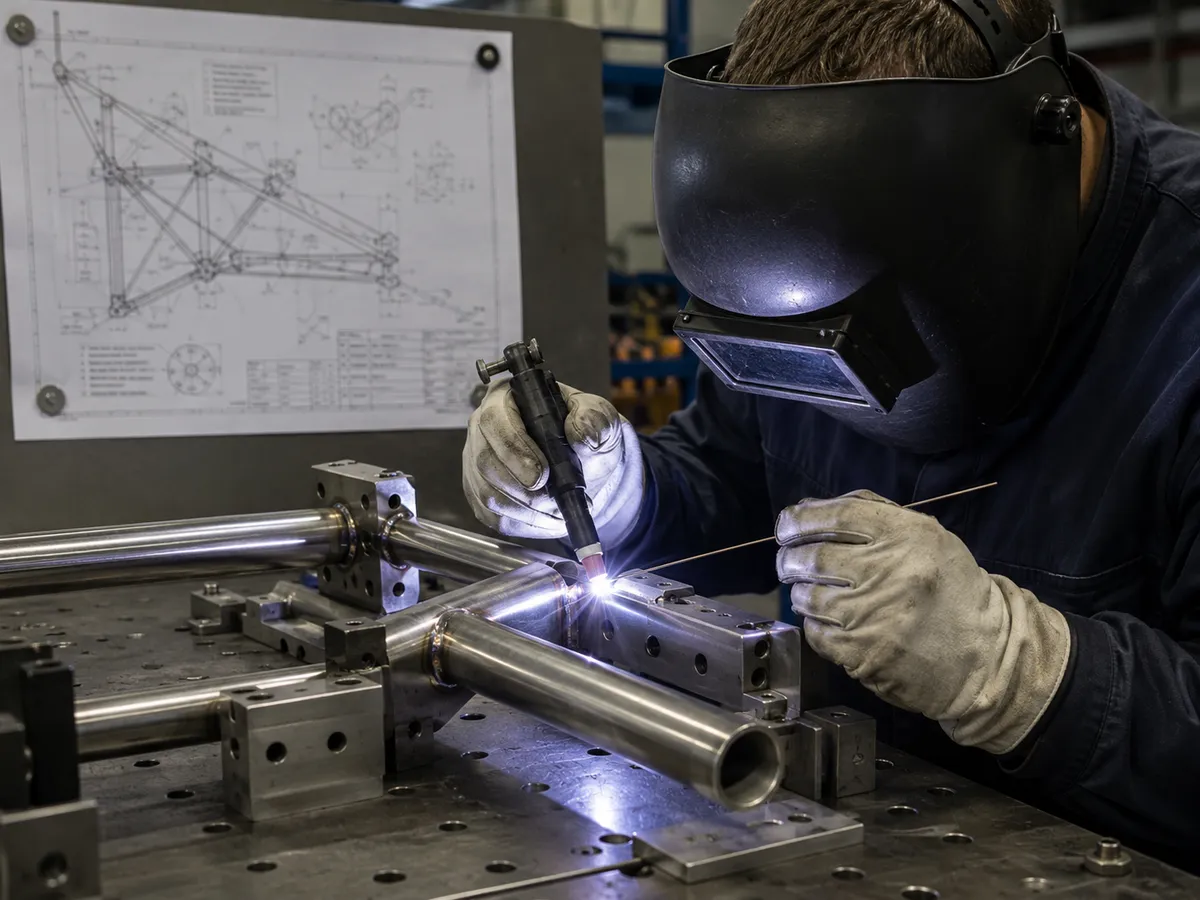
Aerospace procurement is often described as uniquely complex, but the machines are rarely the reason. Many aerospace components are manufactured with the same basic technologies used in mechanical engineering, automotive, medical technology or industrial equipment: turning, milling, laser cutting, bending, welding, coating, assembly and inspection.
The real difference lies in three parameters:
- Low quantities
- High inspection and quality requirements
- Strict supplier qualification and approval restrictions
Those three parameters change the whole cost logic. In automotive, suppliers manufacture in high-volume batches. Machines run for hours or days with limited interruptions, and setup times are spread across hundreds or thousands of parts.
In aerospace, order quantities are often between 1 and 10, so setup times, engineering effort, documentation, inspection and overhead dominate the cost structure. A part that looks simple on a drawing turns expensive because the fixed manufacturing effort sits on very few units. Aerospace procurement is therefore less a purchasing problem than a technical cost-calculation problem.
The quantity problem in aerospace
Low quantities are one of the biggest cost drivers in aerospace and defense. A batch size of 1, 5 or 10 changes the economics of a part completely, because setup time, machine preparation, tooling, inspection and documentation all have to be allocated to a handful of units.
That is why annual volume is usually the wrong basis for cost analysis. What matters is the order quantity. A supplier does not calculate from what might be ordered over a year; the supplier calculates from the production lot that actually has to be manufactured. A part ordered in batches of 10 follows a different cost logic than the same part ordered in batches of 1,000.
For aerospace companies, that creates a real risk. A business case calculated with optimistic future volumes can look attractive, and then the manufacturing cost per part comes in far higher than expected because the real production quantity stays low. Target costing is critical in aerospace procurement for exactly this reason.
Cost driver: quantity
In aerospace, fixed manufacturing effort dominates. Without quantity-aware costing, business cases collapse on the first production run.
Why batch size 5 costs more than batch size 500
Setup, machine preparation, tooling, inspection and documentation have to be allocated across very few units. A part profitable at quantity 100 may be uneconomical at quantity 5. In aerospace, where batches of 1 to 10 are normal, the per-part cost is driven by that fixed manufacturing effort rather than by material or cutting time.
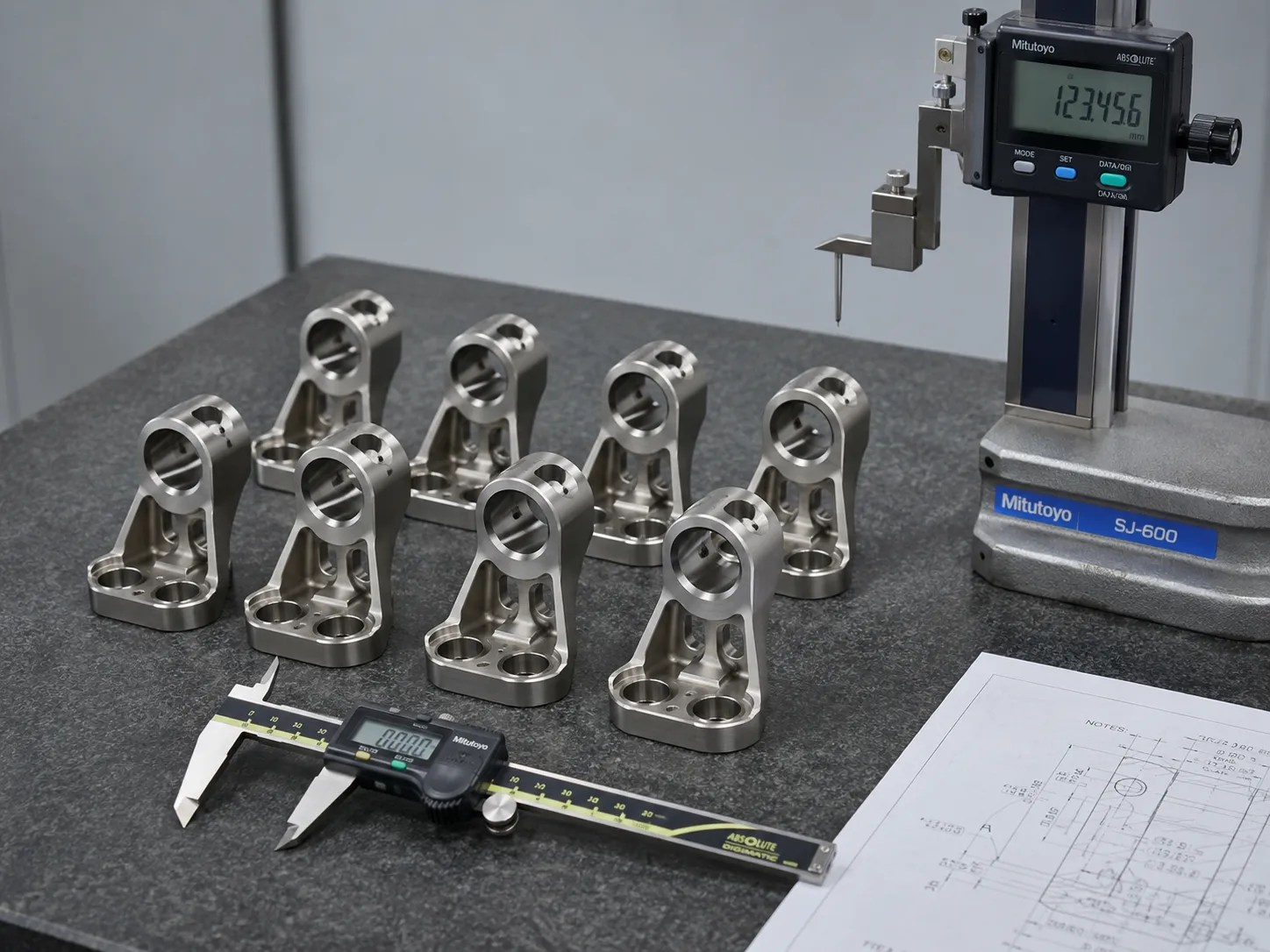
Annual volume is the wrong basis for cost analysis. What matters is the order quantity: the production lot that actually lands on the shop floor. A supplier calculates from the batch that runs through the machine, not from an optimistic annual forecast.
This is where most aerospace business cases break. Models built on planned annual volumes look profitable, while the lots that actually get released are smaller and scattered across years. By the time the cost gap shows up in real quotes, the program is committed and the margin is gone.
Why technical cost data matters more than spend data
Spend data tells a company what it paid in the past. Technical cost data explains why a part costs what it costs, and that distinction decides how much leverage procurement has.
A spend-analysis tool can show that Supplier A is more expensive than Supplier B. It cannot say whether the difference is justified by material, geometry, tolerances, manufacturing time, setup effort, machine cost, inspection requirements or local labor rates.
COVALYZE connects technical product data with commercial procurement data. It analyzes part geometry, material, process steps, machine times, setup times, raw material inputs and regional cost structures, so companies can calculate target costs and compare supplier prices against a technical cost baseline.
Instead of asking only, "What did we pay?", companies can ask:
- What should this part cost?
- Which cost drivers explain the supplier price?
- How much of the price is material?
- How much is machine time?
- How much is setup time?
- How does quantity affect the unit cost?
- What would this part cost in another production region?
- Should we manufacture this part internally or source it externally?
These are the questions traditional procurement systems cannot answer.
How COVALYZE calculates manufacturing costs
COVALYZE uses a process-based manufacturing cost logic. The platform combines technical part data with manufacturing process formulas, machine data, material prices and regional cost structures.
A simple example: if laser cutting 100 mm of a 3 mm sheet metal part takes 1 second, then a 3 mm sheet metal part with a 500 mm cutting contour requires approximately 5 seconds of laser cutting time. This process time is largely independent of geography. A laser cutting machine in Germany, China or the USA needs the same basic process time for the same geometry and material thickness.
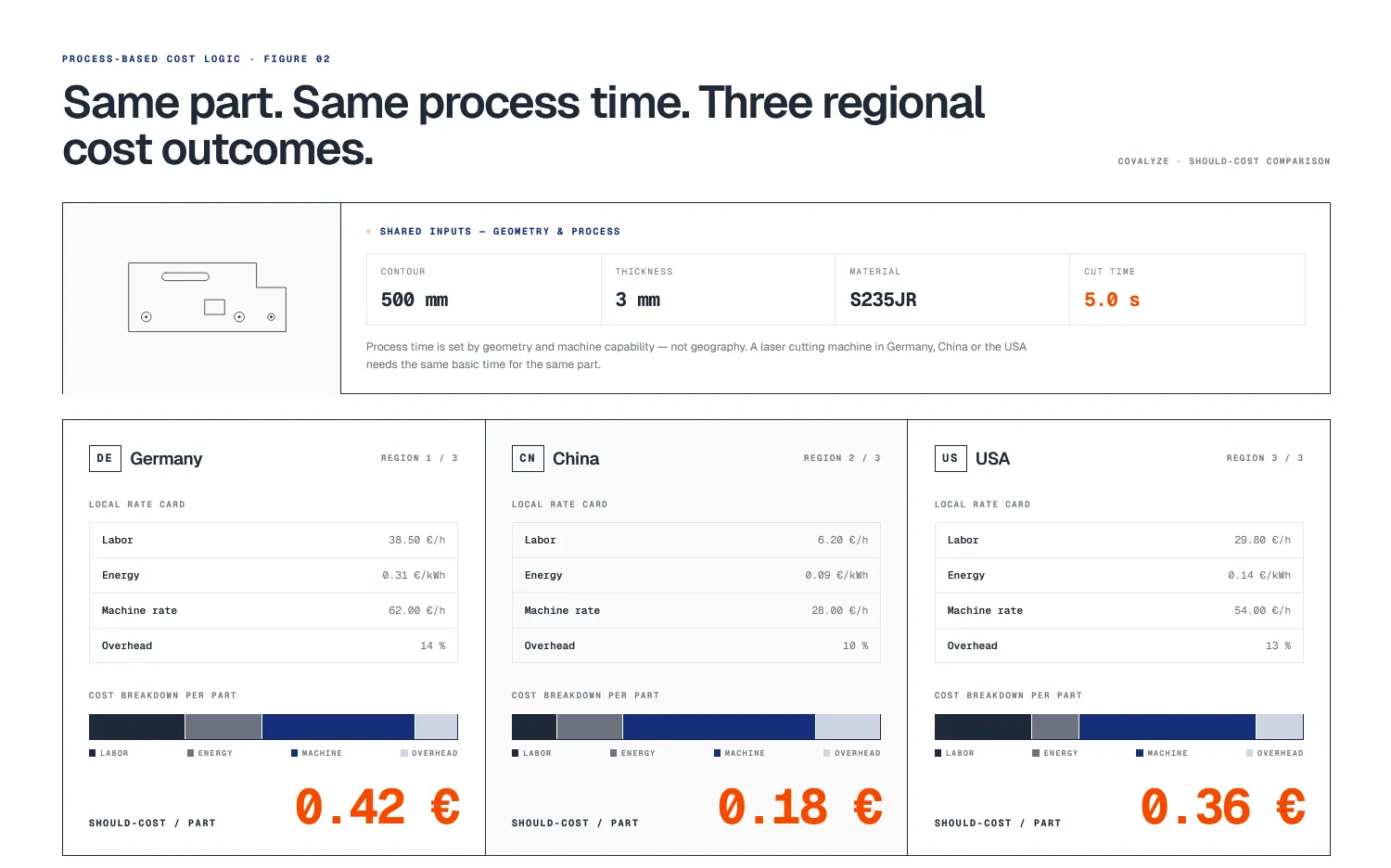
What changes is the local cost structure. Labor costs, energy prices, machine hourly rates, productivity assumptions, annual productive hours and overhead structures differ by region. By combining global process times with local machine and cost data, COVALYZE calculates local manufacturing costs for different production countries. The output is a process-based should-cost calculation rather than a price comparison.
From manual Excel costing to automated cost intelligence
For years, technical cost analysis was manual work. Value analysts and cost engineers extracted drawing data, entered geometric parameters into Excel templates, estimated process times, applied machine rates and adjusted assumptions for material, setup time and region. Some teams used legacy costing systems; others built heavily customized Excel models for turning, milling, laser cutting, welding or assembly.
That approach is slow and hard to scale. A single simple part can take several hours to cost manually, and for complex assemblies or large part portfolios the effort turns into a consulting project.
COVALYZE automates the workflow. With STEP files, the platform calculates a part within seconds; with PDF or TIF drawings, it takes one to two minutes per file. Technical data is extracted, structured and connected to the relevant cost logic. Cost transparency of this kind is no longer limited to large OEMs with dedicated value-analysis departments. Mid-sized companies can get it without building an internal expert team.
Why this matters for make-or-buy decisions
Make-or-buy analysis is one of the strongest use cases for COVALYZE. Many mid-sized manufacturers face the same question: produce this part internally, or source it from a supplier? Without technical cost transparency, that call gets made on supplier quotes, historical prices or rough assumptions, and the risk sits with the company making it.
COVALYZE compares internal manufacturing costs with external supplier prices. If the company runs machines comparable to the supplier's equipment, the platform can calculate whether internal production would be economically attractive. Welded assemblies, machined parts, turned parts, milled parts and complex mechanical components are where this matters most.
The answer is not always insourcing. Sometimes an external supplier has the better cost position, sometimes internal production improves machine utilization, sometimes another region makes sense, and sometimes the existing supplier price is already competitive. The value lies in knowing the cost logic behind whichever decision gets made.
Why aerospace and defense are strategic fields for cost intelligence
Aerospace and defense share similar procurement dynamics:
- Low volumes
- High technical complexity
- Strict quality requirements
- Strong documentation needs
- Limited supplier pools
- High cost of failure
- Long product lifecycles
- High pressure to make business cases work
That mix makes target costing and should-cost analysis particularly relevant.
A wrong quantity assumption can destroy the economics of an aerospace project: a part that is profitable at quantity 100 may be uneconomical at quantity 5. A supplier quote can look expensive until the real setup, inspection and documentation effort is calculated, and a make-or-buy decision can look obvious until regional manufacturing costs are compared.
COVALYZE gives aerospace and defense companies a way to calculate these scenarios before committing to a sourcing strategy, production plan or supplier negotiation.
Make-or-buy
Internal cost against supplier quote on a process-based baseline, not on historical price.
When the supplier's machines match yours, the question changes
Welded assemblies, machined parts, turned and milled components are where make-or-buy decisions move the most margin.
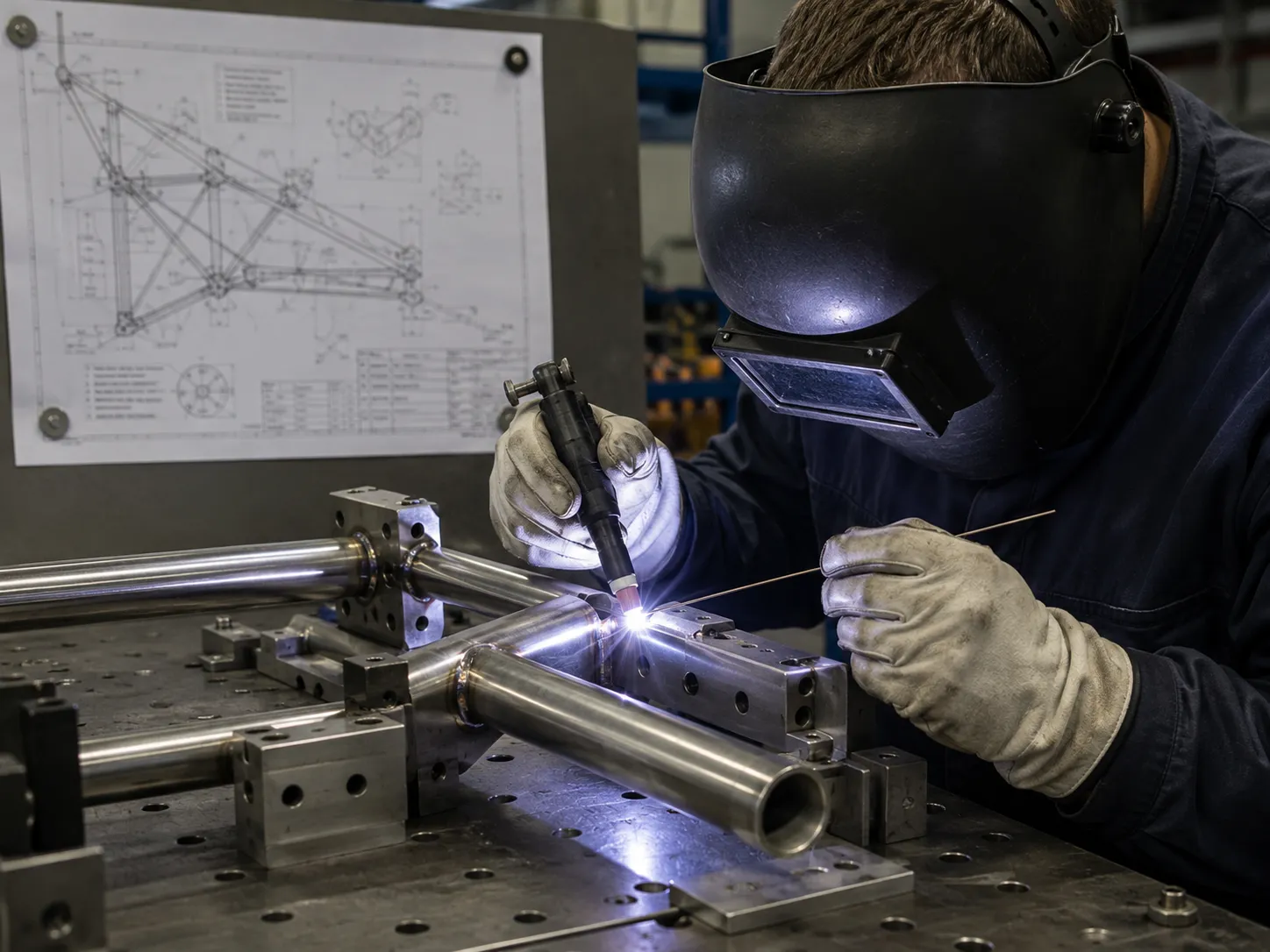
The right answer is not always to insource. Sometimes the supplier has a better cost position, sometimes machine utilization shifts the math. The value is knowing the cost logic behind the decision.
The core insight
Industries differ less by the machines used to manufacture parts than by three cost parameters:
- Quantity
- Inspection requirements
- Supplier approval restrictions
That is why COVALYZE can be applied across aerospace, defense, manufacturing, energy, machinery and other technical industries. The machines are similar and the cost logic is comparable. What differs is quantities, requirements, regions and supplier constraints.
What COVALYZE adds to the procurement landscape
COVALYZE does not replace transactional procurement systems. It is the cost-intelligence layer they are missing: those platforms manage the purchasing process, COVALYZE explains the technical cost logic behind the part.
That gives procurement teams a stronger position in supplier negotiations, engineering teams better target-cost feedback during design, and management teams a more reliable basis for make-or-buy, sourcing and margin decisions.
Bottom line
Aerospace procurement does not need another tool that shows what was ordered and paid. It needs a platform that explains what a part should cost.
COVALYZE combines technical drawing analysis, process-based manufacturing calculations, machine data, material prices, regional cost structures and procurement analytics to calculate target costs at part level. For companies working with low volumes, complex parts and high supplier requirements, that changes the starting position of every negotiation.
Procurement systems show what was paid. COVALYZE shows what a part should cost.